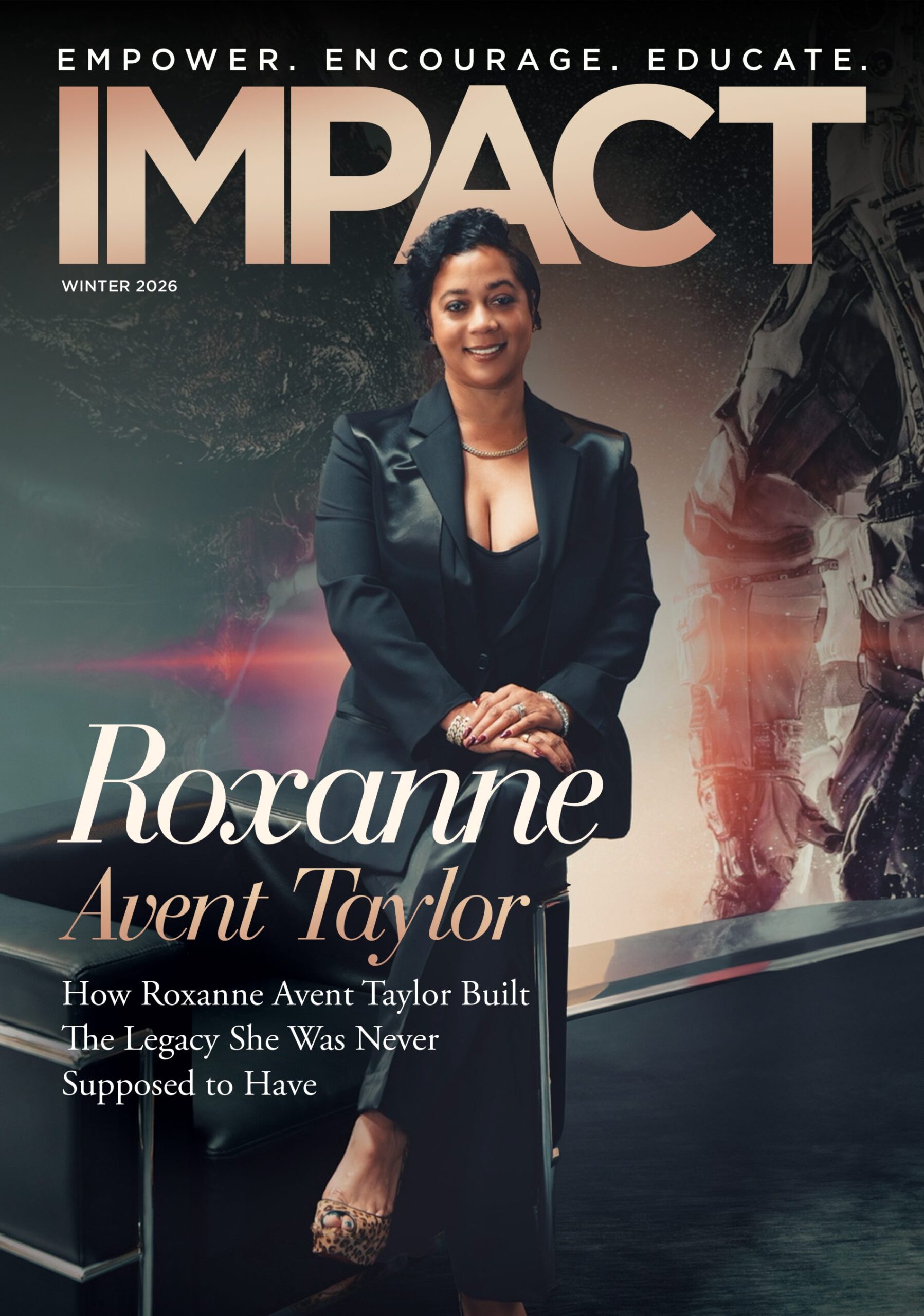
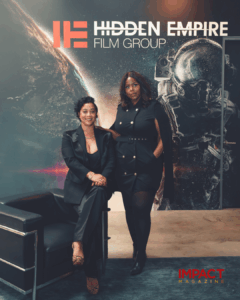
There are people who arrive in Hollywood chasing a dream. And then there are people like Roxanne Avent Taylor, who arrive carrying purpose, even before they have language for it.
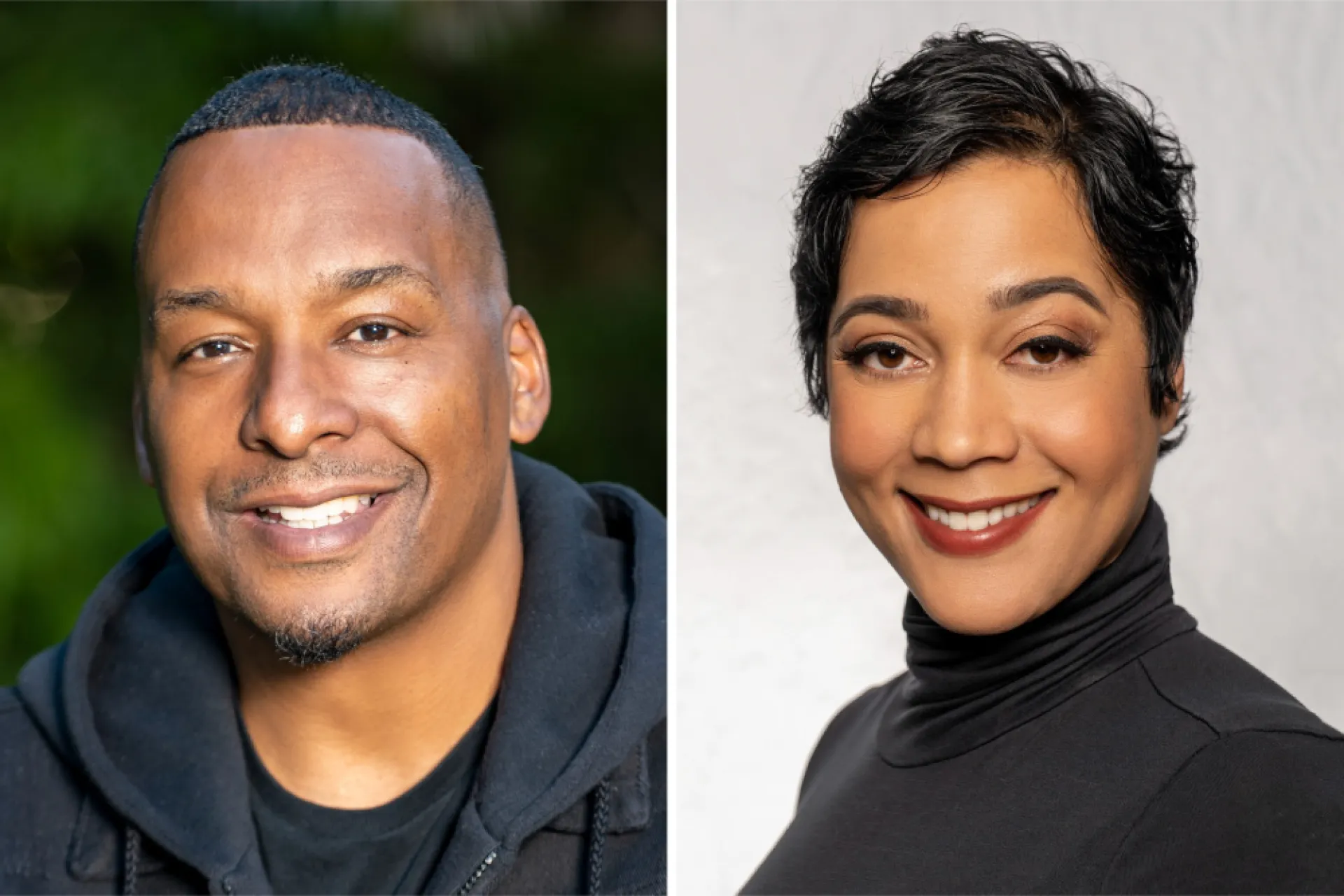
Roxanne is not loud about her brilliance. She doesn’t perform resilience. She embodies it. As co-founder and CEO of Hidden Empire Film Group, she has quietly but powerfully built one of the most successful Black-owned independent production companies in the industry; sixteen years deep, with films that have reached global audiences and reshaped what independent storytelling can look like.
But when you sit with Roxanne, what stands out most isn’t the credits. It’s the clarity. The calm certainty of a woman who knows exactly who she is, and why she’s here.
To begin our 2026 cover stories, I wanted to go beyond what she’s built and explore who she is beneath it all. The theme of this issue, “I Wasn’t Supposed to Be Here,” felt tailor-made for her journey. Not because she doesn’t belong, but because for a long time, the world didn’t make room for women like her.
So I asked her.
Tunisha:
You’ve spoken about your early years working at the Directors Guild of America before co-founding Hidden Empire Film Group. When you look back at that period now, what emotion hits you hardest, and what made you keep pushing when most people might have given up?
Roxanne:
“I wouldn’t say I started at the bottom, I started without a roadmap. I didn’t have formal education in this business, and I didn’t have mentors or champions guiding me through Hollywood. What I did have was faith.”
She tells me she was just 20 years old when she began working at the DGA, her first real proximity to Hollywood, even though she didn’t yet understand its power.
“At the time, it simply felt like proximity. In hindsight, it was education.”
There were moments, she admits, that were challenging, sometimes toxic, and it would have been easy to walk away. But instead, she stayed. She learned every role. She became versatile. She absorbed everything.
“My first producing-related assignment was working on the Alfred Hitchcock exhibit. I was deeply hands-on, setting up theater screenings, assisting with television awards, supporting events, and learning how productions came together behind the scenes. Because I didn’t come in through a traditional path, I learned by doing. I learned every job. That process made me incredibly versatile and gave me deep respect for every role in filmmaking.
What hits me hardest now is gratitude mixed with clarity, clarity I didn’t have then. What kept me pushing wasn’t a perfectly articulated dream; it was instinct.”
That instinct became the blueprint, not just for Hidden Empire, but for how Roxanne leads today.
Hidden Empire Film Group would go on to produce a bold slate of films: Meet the Blacks, Traffik, The Intruder, Black and Blue, Fatale, and Supremacy; stories that don’t just entertain, but confront fear, injustice, and identity head-on. And that’s no accident.
Tunisha:
Your films are known for being more than entertainment. What part of your personal story or values do you pour into each project, especially in moments when you felt you “weren’t supposed to be here”?
Roxanne:
“For a long time, I truly believed I wasn’t supposed to be here. Between the stereotypes, the environments I came from, and the trauma I experienced early in life, I was operating in survival mode.”
She pauses, then continues.
“But what I never gave up on was the belief that our stories mattered.”
Every project, she says, is rooted in truth and humanity. Her characters face fear, loss, injustice, but they don’t quit.
“They fight. They endure. And they find a way through. That mirrors my own journey.”
As a young girl, film showed her possibility. Today, she returns that gift to audiences, especially those who need to see themselves reflected on screen.
Hidden Empire wasn’t built because Hollywood opened doors. It was built because the doors stayed closed.
Tunisha:
You and Deon built Hidden Empire because traditional Hollywood doors often closed on you both. How did that experience shape who you are beyond the producer title?
Roxanne:
“No one invited me in. No one offered me jobs. No one congratulated me along the way.”
She says this without bitterness, just truth.
“Everything I’ve built, I built without industry backing. And while that can feel bittersweet, it also gave me something far deeper: self-trust.”
What shaped her most, she says, was faith.
“I truly believe God has carried me my entire life.” She and Deon learned how to create their own rooms. How to disrupt. How to lead with conviction and compassion. And in doing so, Roxanne became more than a producer, she became a builder of possibility for others.
Today, Roxanne is not only a film executive, but a mentor, activist, and visionary. Through her C.L.I.M.B. mentoring program, her work with youth organizations, and her award-winning civic engagement series Be Woke. Vote., she continues to expand what impact looks like beyond entertainment.
So I asked her the question that sits at the heart of this issue.
Tunisha:
Now that you’ve achieved so much, does the idea of “I wasn’t supposed to be here” still resonate with you?
Roxanne:
“Not anymore.”
She smiles.
“Today, as a mother, a wife, and a recent graduate of Pepperdine University with my master’s degree, I know without hesitation that I am supposed to be here.”
What remains, she says, is transformation.
“Growth is about becoming the person you knew you were meant to be all along.”
The legacy she’s building isn’t just about films or milestones. It’s about energy. Perspective. Freedom.
Tunisha:
Do you remember the moment you decided to fight for a life that felt out of reach?
Roxanne:
“I don’t know if I can point to one exact day. I was born into the cards I was dealt, and survival came first. As situations got harder, my determination grew stronger, even when it showed up imperfectly. There were moments of being lost, getting into trouble, even being on the streets and emotionally checked out at a very young age.
But even then, something inside me never shut off.
I always knew I was special. I always believed something big was waiting for me, even when nothing around me reflected that belief. That quiet knowing became my anchor. I didn’t have the language for manifestation then, but that’s exactly what it was. I held onto a vision of a different life long before I had the tools to build it.”
That quiet knowing, before manifestation had a name, became her anchor.
Tunisha:
What part of your story were you once afraid to tell?
Roxanne:
“For a long time, there were parts of my story I wasn’t ready to share, not out of shame, but out of respect for the weight of truth. Some stories require time, protection, and space to be told fully.
That story will live in my book where it can be held with the care, depth, and intention it deserves. Until then, I lead by example.
Sometimes courage isn’t about saying everything. It’s about knowing when and where to say it.”
Roxanne Avent Taylor is not here by accident. She is here by alignment, by faith, by fight, by vision. Her journey reminds us that being told you don’t belong is often the clearest sign that you’re meant to build something new.
And that is IMPACT.